Following on from Part 1 I thought I’d tell you about the transformation of my present garden in Ottawa. It’s a behind the scenes look at the changes over the last 8 years and there will be more to come too! It is as much about my own transformation as it is about the garden.
We arrived here in July 2016 and it was immediately obvious that the previous owners were not gardeners. The borders were over grown with weeds like gout weed and the main plants were things that survived on neglect like hosta, miscanthus grass, dogwood and a spreading shrub called Stephanandra
The Before Photos
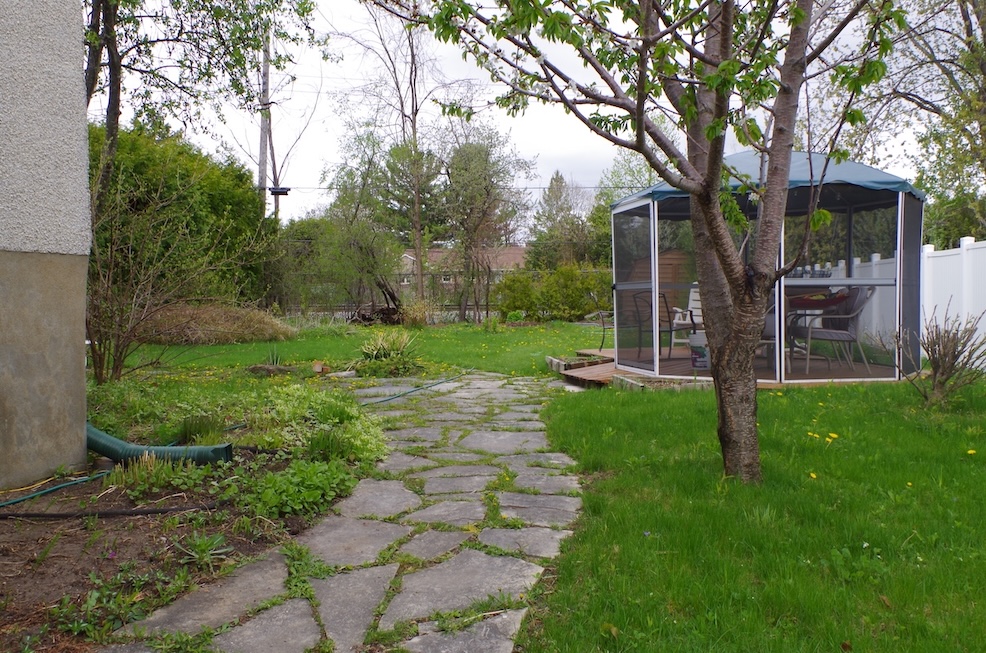
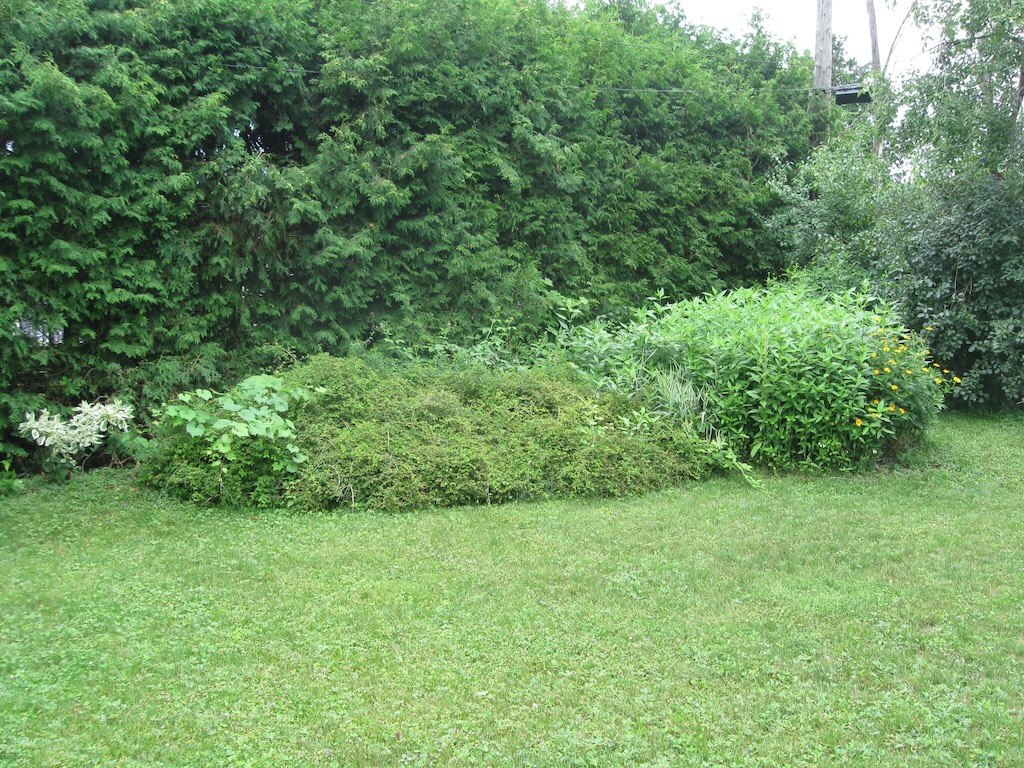
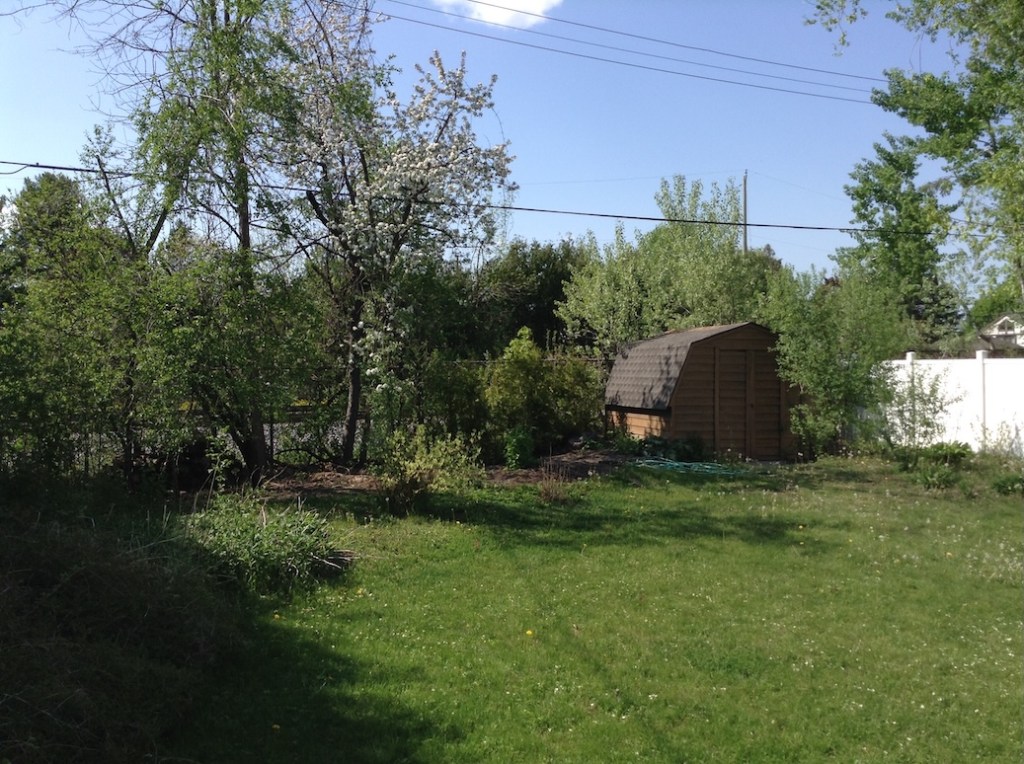
There were also quite a few buckthorn trees which are invasive and had to be removed. I worked on removal over the first few years and now all of them are gone although seedlings still pop up every year. I replaced them with an elderberry, Ptelea trifoliata (Hop Tree), Physocarpus opulifolius (Ninebark), Amelanchier canadensis (Serviceberry) and Catalpa. This year I am hopefully adding a crab apple too.
I knew I needed to get straight to work on the garden and start changing the layout and style of planting. My first job after moving in and unpacking was to use the paper and cardboard from the move to lay on the weedy borders and grass, working around existing plants if I wanted to keep them. Once this was complete I added wood chip mulch on top. It was an instant improvement as there was now some differentiation between the grass and borders. It also meant I could then take my time to decide on the plants I wanted to add.
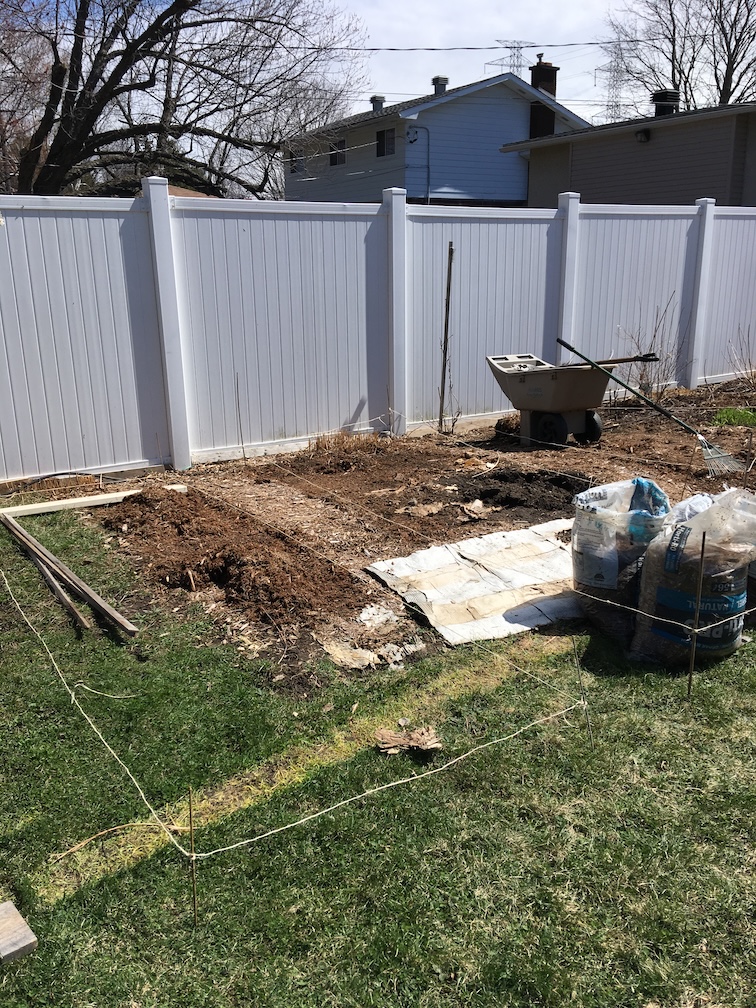
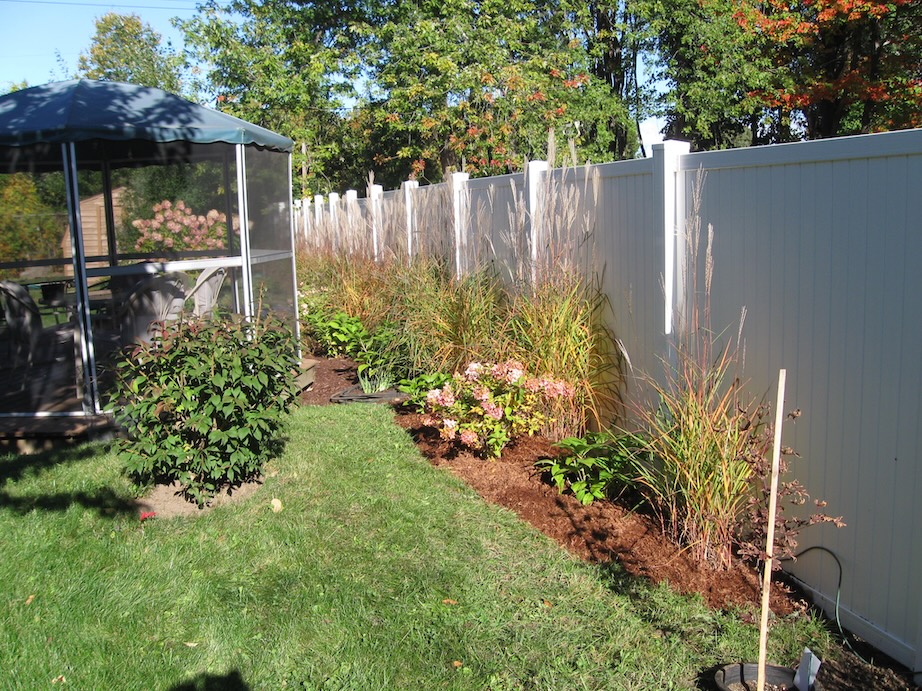
We added a couple of raised beds to be able to start growing vegetables and flowers.
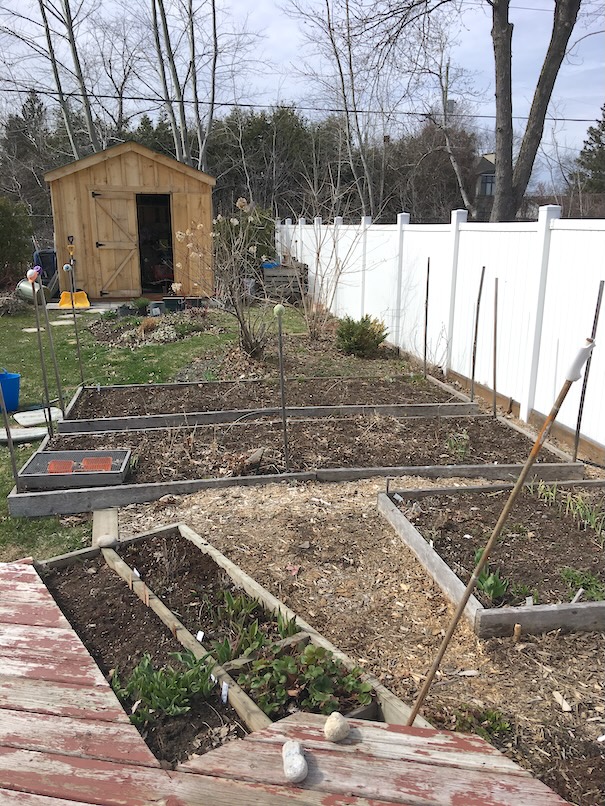
Then as areas of the old deck rotted I removed the boards and used the frame as raised beds too. It is interesting to look back at the progress as things evolved and changed. (You can also see I got a lovely new shed!)
The deck is completely gone now and has been replaced with a circular gravel area enclosed in flower beds. All the Miscanthus grasses have been removed and replaced with native grasses. Eventually there will be a new gazebo on this area! (And the shed is now blue)

Entrance to the Garden – Before and After
There is now a totally different feel to the garden as you enter. Slide the arrow below to see the difference!


I have also noticed that over time there is less room for annuals as I have made the switch to more perennials and shrubs. This is much less work each year and far more sustainable in the long term. Many of the perennials have been grown from seed and are now well established. I much prefer this long term progress than buying big plants already in bloom from the garden centre. This is a result in a change in my thinking about the sustainability of plant production and how those plants are produced and marketed for sale.
Using the No Dig Method to Transform a Border
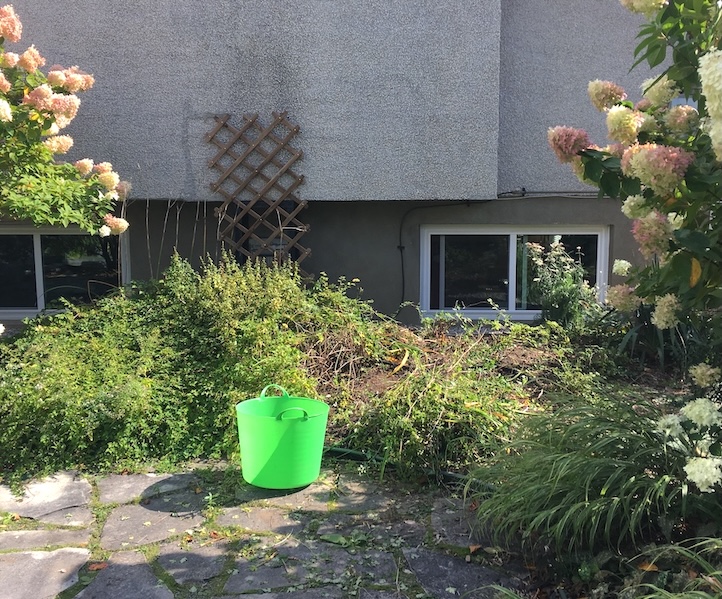
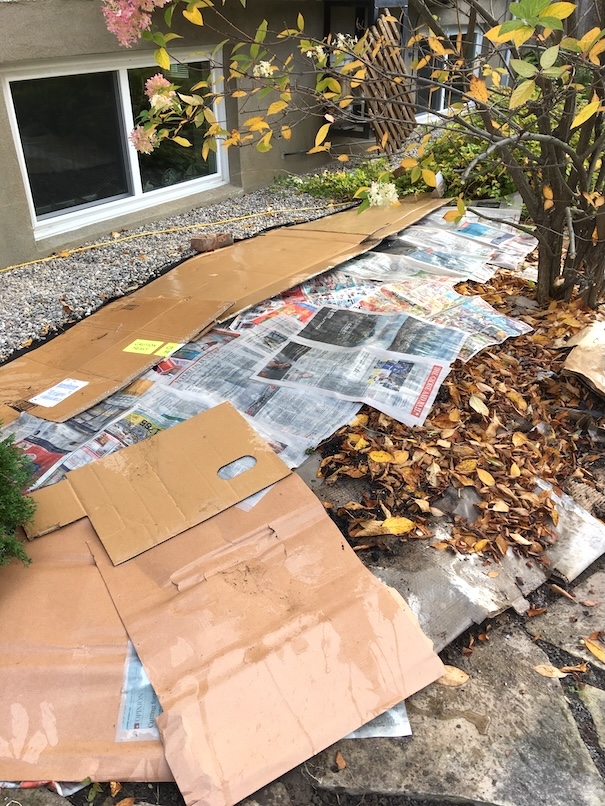
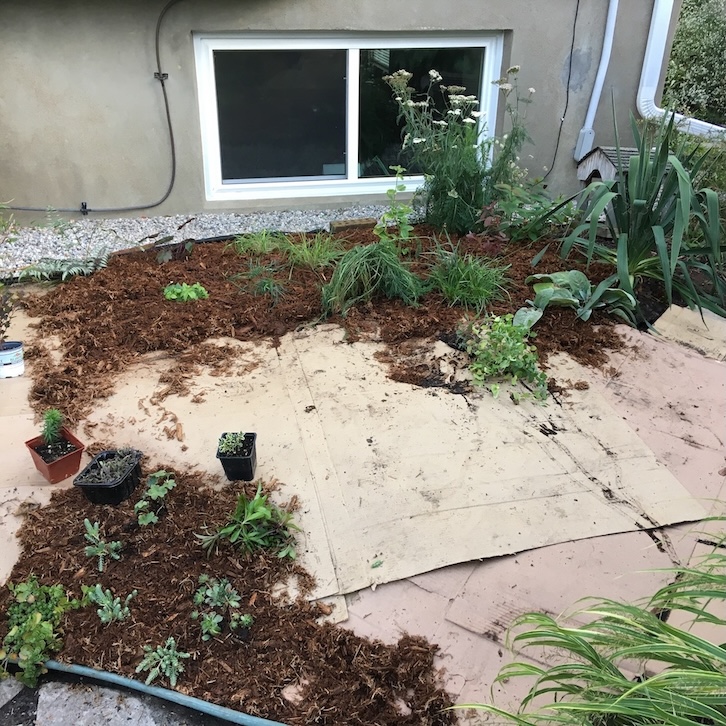
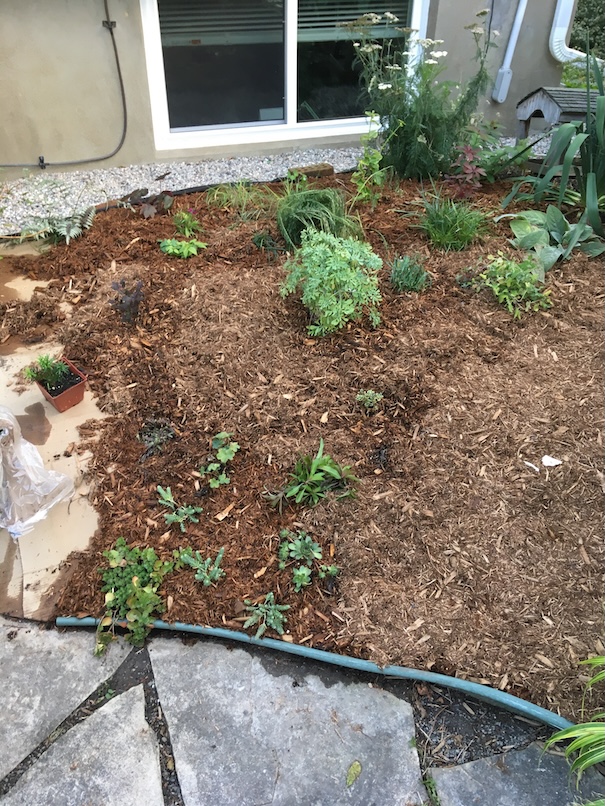
This border is an example of using the “No Dig” method for making changes. I chopped down the weeds and plants I did not want and left them on the soil which I then covered with a layer of leaves. Over the top of this there is newspaper and several layers of cardboard placed so there are no gaps. I watered the cardboard and added mulch, then planted in to holes I made in the cardboard. It does not take long for small plants to grow and fill in.
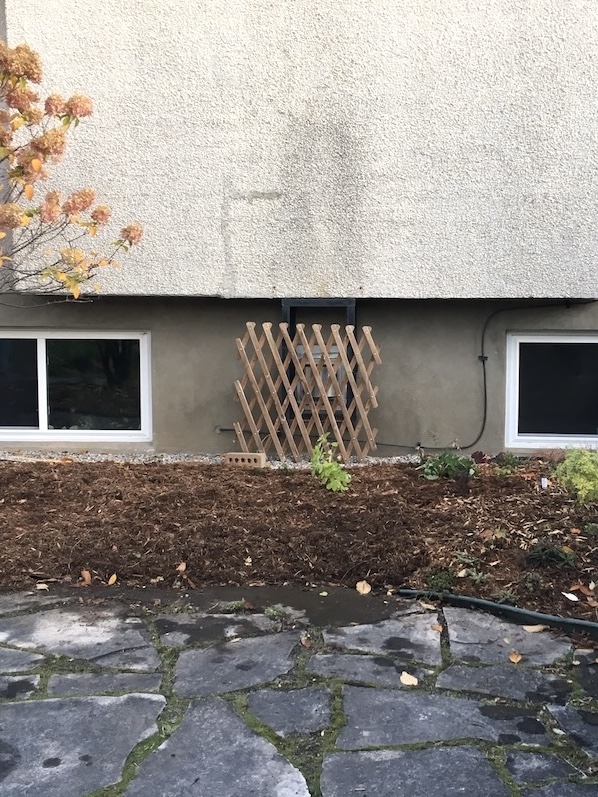

Changes to The Front Garden
The style of the front garden was not to my liking at all. First I removed the plastic edging and irrigation hoses that were there. Then I left the clipped Berberis plants to grow in to a more natural shape. Yes, I know they are invasive and will eventually remove and replace them.
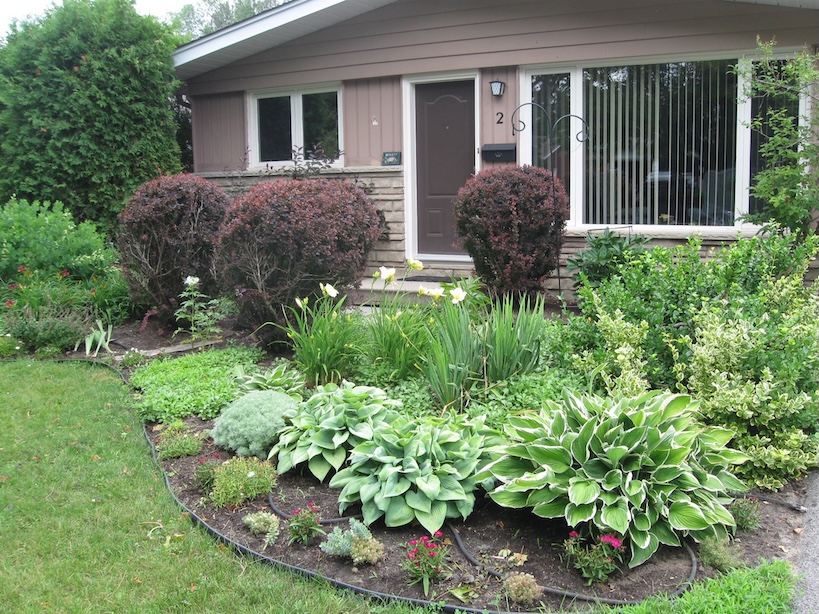
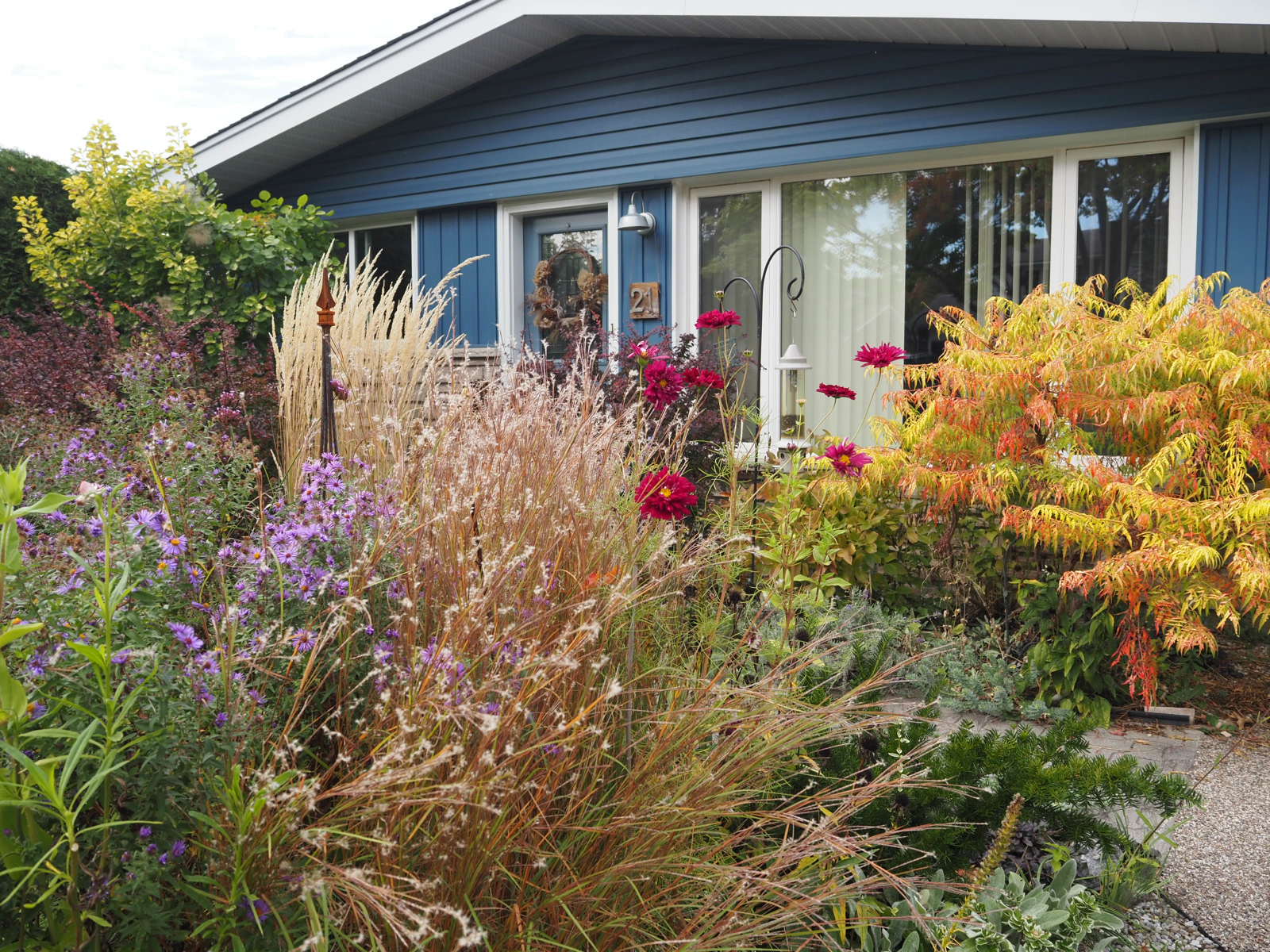
The front garden is now much more wild and colourful with interest in all 4 seasons. The day lilies and iris are gone and I am slowly working on adding more long lasting perennials like coneflowers and globe thistles that the birds love in the winter.
Other important changes to note : adding compost bins (I have 6!) and rain barrels (5 of these), replacing the asphalt driveway with a permeable surface, no chemical fertilizer or pesticide use, addition of birdhouses, a bat box and birdbaths, increased insect visits and activity, lots of grass snakes, and I am constantly working on rejuvenating the soil.
I will have the garden open for visits on some days this year. The first one is on my seedling sale date Saturday May 24th 10 – 2. Further dates to be announced soon. Drop by and take a look around and I am happy to answer any questions you might have.
If there is a topic you would like to know more about then let me know and I will cover it in a future blog post.
 Rosalind's Garden Blooms
Lots of work and planning over 9years to create such a beautiful garden -I hope many people come and see for themselves the amazing job you have done . You are an inspiration and an incredible gardener who grows such a variety of plants !
Thank you! And it’s not finished yet!